
World AIDS Day 2025: $11.34 Billion Boost for the Global Fight Against HIV, TB, and Malaria
Chioma Nnamani

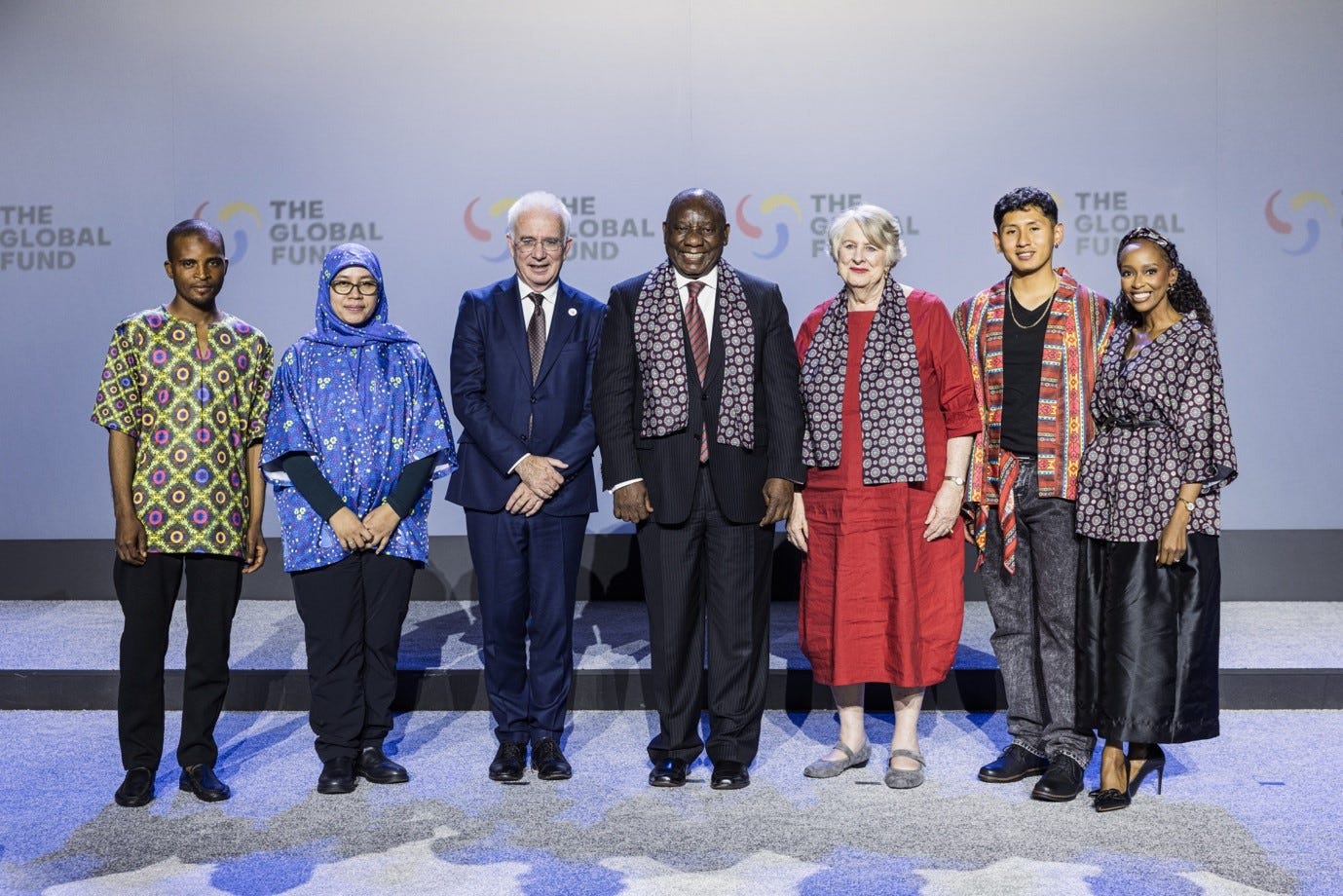
On the sidelines of the 2025 G20 Summit, global leaders, donors, civil society groups, and health advocates convened for the Global Fund’s 8th Replenishment, a critical financing moment for global health. Held just days before World AIDS Day, the meeting carried significant symbolic and practical weight, creating a focused opportunity to turn political commitments into resources that can accelerate action against HIV, TB, and malaria. As the Global Fund enters a new funding cycle, the decisions and pledges made will shape the direction and strength of the global fight against these major infectious diseases.
The Global Fund has saved an estimated 70 million lives since 2022 and reduced deaths from AIDS, tuberculosis and malaria by 63%. Yet as highlighted in its 2025 Results Report, this momentum has begun to stall. This slowdown is particularly concerning given the world’s ambition to end these diseases by 2030. As World AIDS Day was commemorated under the theme “Overcoming Disruption, Transforming the AIDS Response” these concerns become more urgent. Millions still lack access to lifesaving HIV services, and key populations remain disproportionately affected.
The World Health Organization has urged countries to accelerate six strategic priorities as part of efforts to overcome disruptions and transform the AIDS response:
- scaling up HIV testing and treatment to close the gaps in the 95–95–95 cascade
- integrating HIV, hepatitis, and STI services into reproductive and maternal health
- expanding equitable access to new prevention tools like lenacapavir
- strengthening digital and data systems to guide decision-making
- safeguarding domestic and donor financing to ensure service continuity during crises
- empowering communities by eliminating stigma and discriminatory laws that push people away from care.
In 2024, 630,000 people died of AIDS-related causes, 1.3 million were newly infected, and tuberculosis remained the world’s deadliest infectious disease, claiming 1.23 million lives. Malaria also continues to threaten the most vulnerable, especially children under five, as climate shocks, conflict, and insecticide resistance drive its resurgence.
Rising challenges such as drug resistant TB, displacement, and extreme weather are making it harder to keep people in care and protect communities. For countries on the frontlines, especially in Africa, where the burden is highest, decades of progress hang in the balance. In light of these trends, the Global Fund’s Eighth Replenishment, co-hosted by South Africa and the United Kingdom, becomes critical.
Insights from Global Leaders
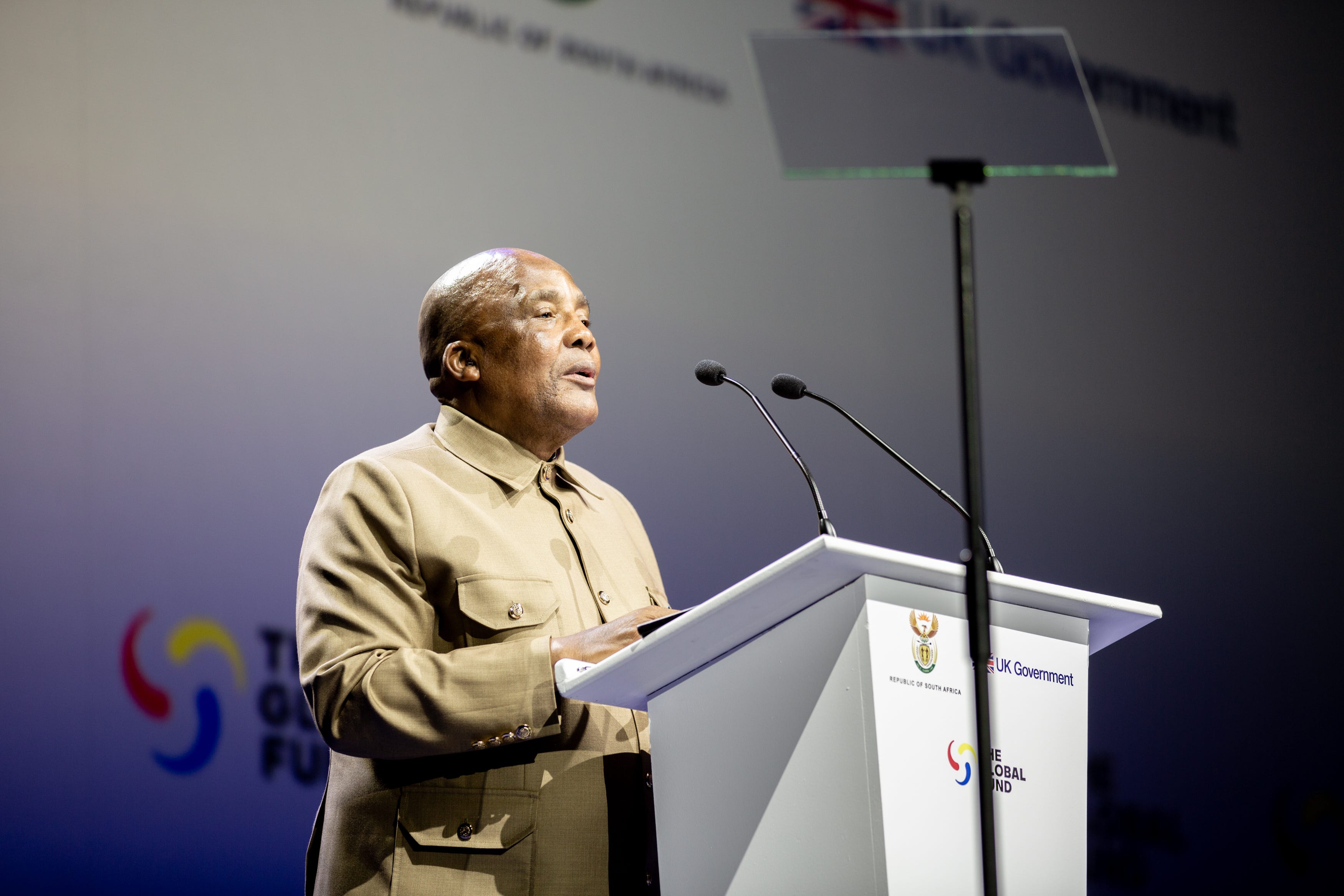
In his opening remarks, South Africa’s Minister of Health, Dr. Aaron Motsoaledi, reminded delegates that the summit was not about charity, but shared responsibility. He outlined five pillars guiding the co-hosting vision, solidarity, sustainability, innovation, equity and transformation. He emphasised that achieving these pillars will require a more effective and responsive Global Fund, one that strengthens the health ecosystem through simpler processes, integrated service delivery, and approaches that place communities at the centre. He added that this is not only a health ambition but also an economic and security imperative.
“For every dollar invested, we expect a return of $19 in health and economic gains. These pledges are among the smartest investment the world can make to strengthen global health security, pandemic preparedness and create a healthier, safer and more equitable world. Our call to action as we move into the pledging session: let us be bold and let our commitment reflect the ambition of global health and the determination of communities on the front lines.”
~ Dr Aaron Motsoaledi
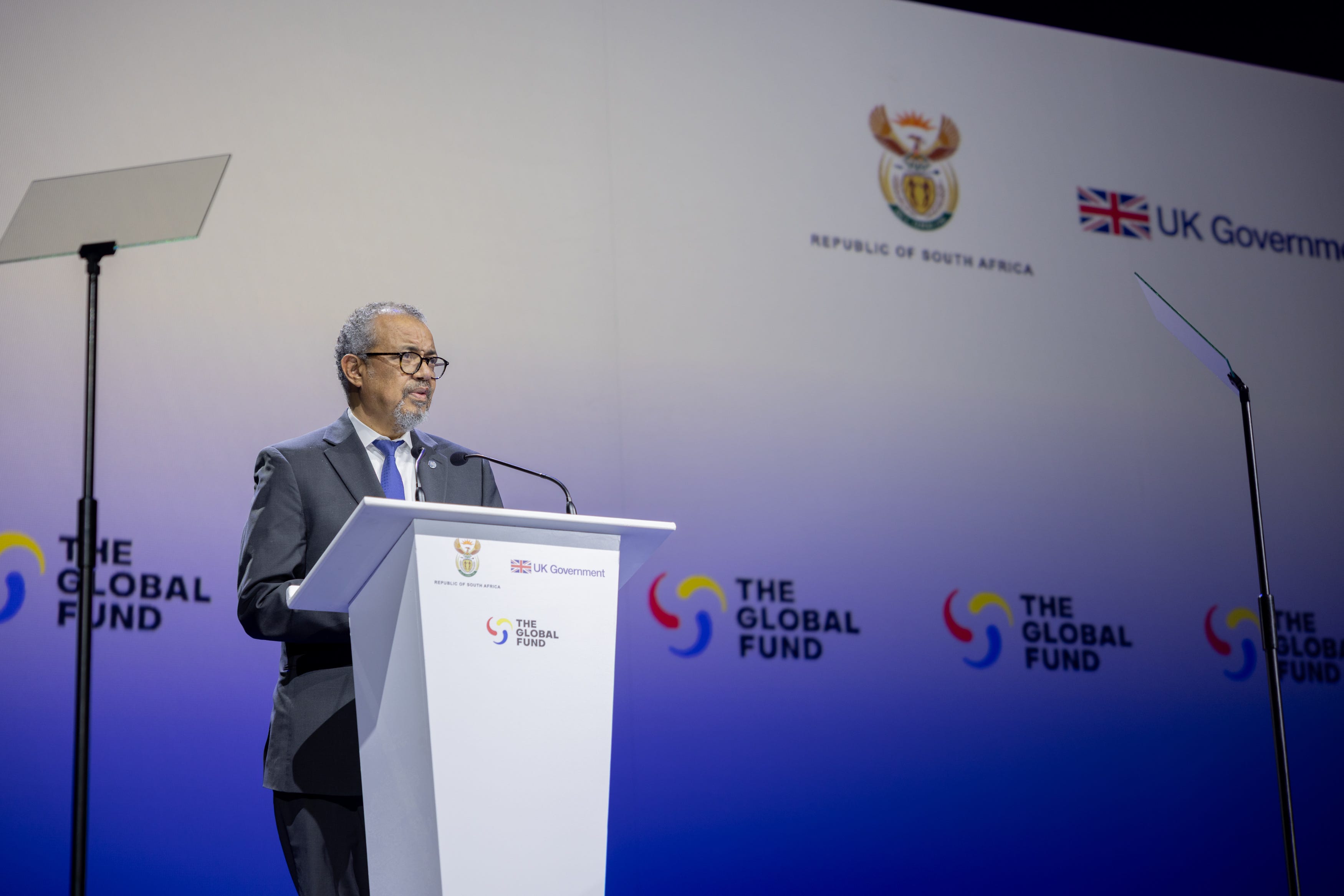
For World Health Organization Director-General, Dr. Tedros Adhanom Ghebreyesus, the Global Fund is “family.” Reflecting on his journey from serving as Ethiopia’s Minister of Health to chairing the Fund’s Board during the 2009 global recession, and now leading WHO, he noted that this long view has given him a front-row seat to the scale of progress achieved. “Thanks in large part to the Global Fund, HIV, TB and malaria now kill half as many people as they did twenty years ago,” he said.
Dr. Tedros highlighted both the opportunities and challenges ahead. New mosquito-control tools, long-acting therapeutics, improved bed nets, and the possibility of a TB vaccine offer a glimpse of hope. Yet rising drug and insecticide resistance and persistent gaps in access, continue to undermine trust and weaken health responses. In a resource-constrained world, he stressed, integration of services and strengthening collaboration across partners will be crucial.
Following Dr. Tedros’ reflections, Global Fund Executive Director Peter Sands urged the world to view the Eighth Replenishment not only as a response to crisis but as an opportunity to reset what is possible in global health. He noted that, for the first time, low and middle income countries are accessing breakthrough tools such as the new long-acting injectable PrEP, lenacapavir shown to be nearly 100% effective against HIV, at the same time as high-income countries. This, he said, demonstrates that innovation can be deployed at speed and at scale when partners align. Sands added that advances such as AI-powered TB diagnostics and next-generation mosquito nets offer a credible path to ending the epidemics, but only if the world sustains the focus, resources, and solidarity required to ensure these tools reach the communities most at risk.
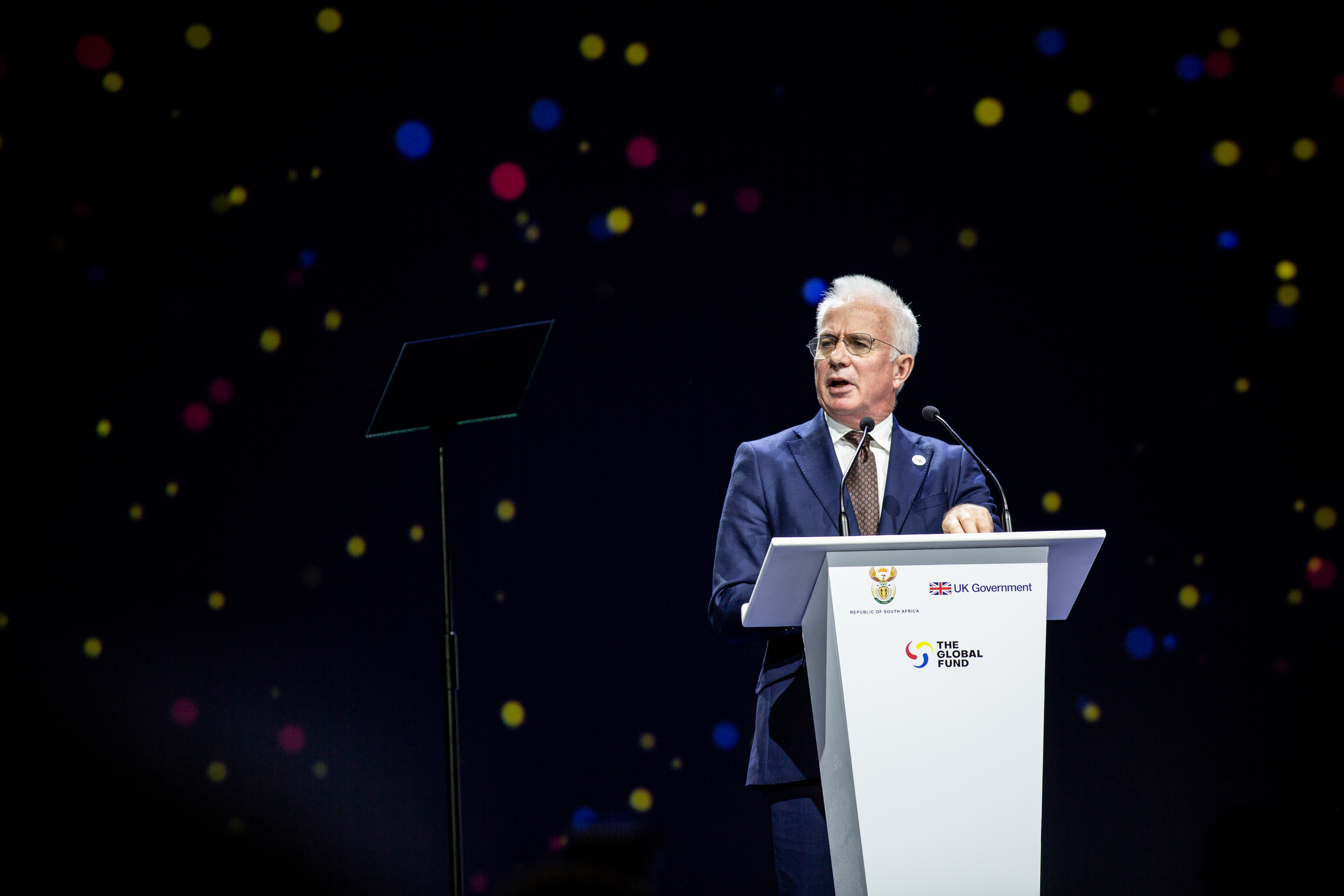
Co-host of the event, United Kingdom Prime Minister Keir Starmer, highlighted the significance of the eighth Global Fund replenishment, noting that it marked the first time the summit was co-hosted by partners from both the Global North and South, with the UK and South Africa leading together. He underscored a shift toward a development approach rooted in partnership rather than paternalism, with a focus on supporting countries in the Global South to mobilise domestic resources, tackle unsustainable debt, and attract private investment.
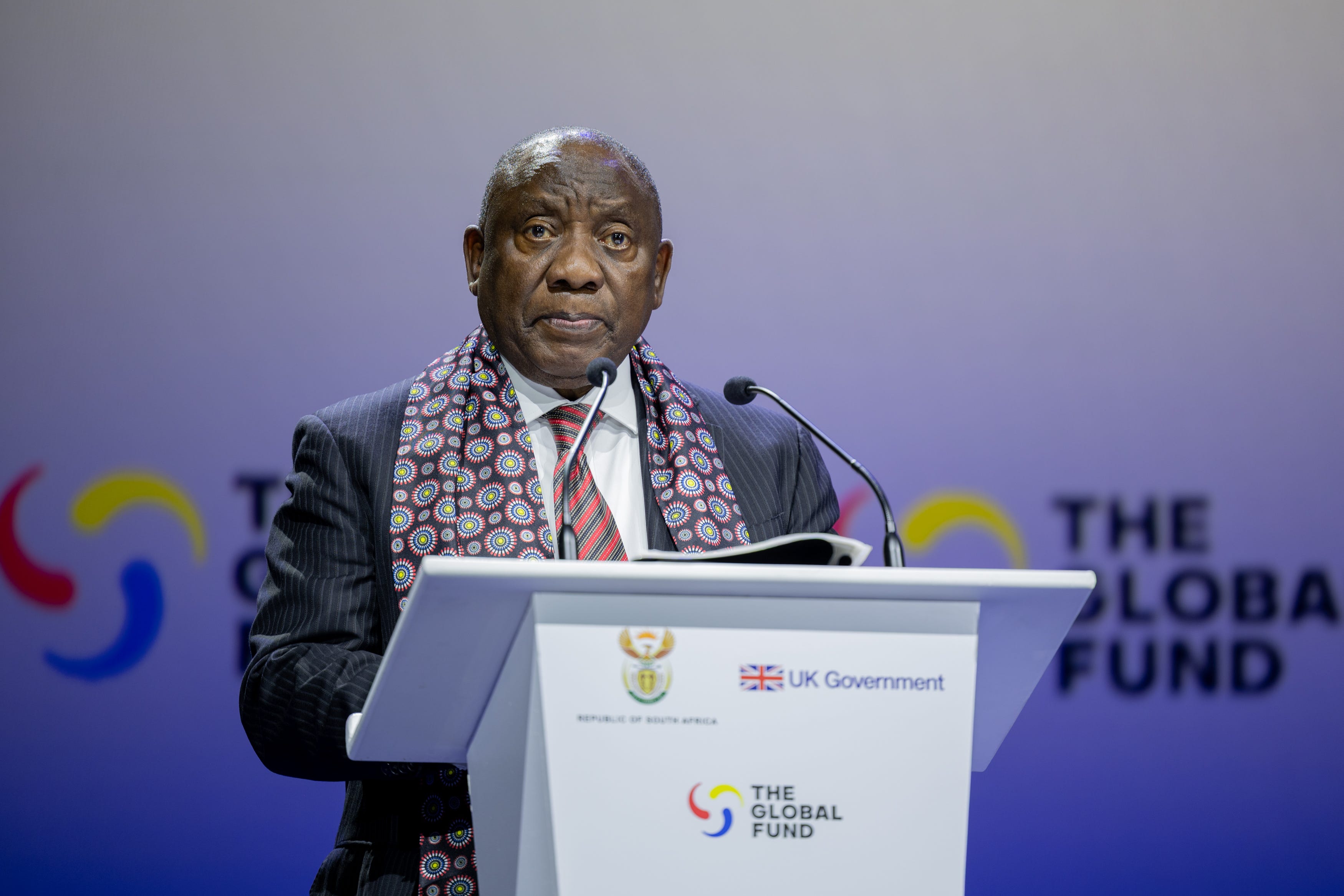
Concluding the replenishment session, the total pledges for the eighth Global Fund replenishment were announced at $11.34 billion, a milestone expected to save millions of lives and strengthen health systems. His Excellency Cyril Ramaphosa, President of South Africa, noted that this reflects the determination of a diverse coalition committed to ending HIV, TB, and malaria, and he called for continued solidarity, innovation, and efficiency to sustain progress.
Why This Matters
As the world marked World AIDS Day 2025, the Global Fund’s Eighth replenishment underscored the urgency of sustained financing for global health. The Fund set an ambitious target of US$18 billion to support its priorities across HIV, TB, and malaria, alongside investments in health systems and pandemic preparedness. The current pledges of US$11.34 billion represent a strong start in what remains a rolling replenishment, with additional commitments anticipated.
This year’s replenishment carried particular significance as it coincided with the first-ever G20 summit hosted in Africa, reinforcing the message that global health is both an economic and security priority. World AIDS Day serves not only to recognise progress but also to remind governments that ending HIV, eliminating malaria, and driving down TB require sustained resources, political commitment, and equitable access to proven tools and locally adapted innovations.