
WHSRM 2026: Rebuilding Trust in Health Information is no Longer Optional in the Digital Health Era
In today’s digital health era, the challenge is not only delivering quality care, but also ensuring people can trust the information that shapes their health decisions. This challenge took centre stage at a session on the sidelines of the World Health Summit Regional Meeting in Nairobi, held from April 27–29, 2026.
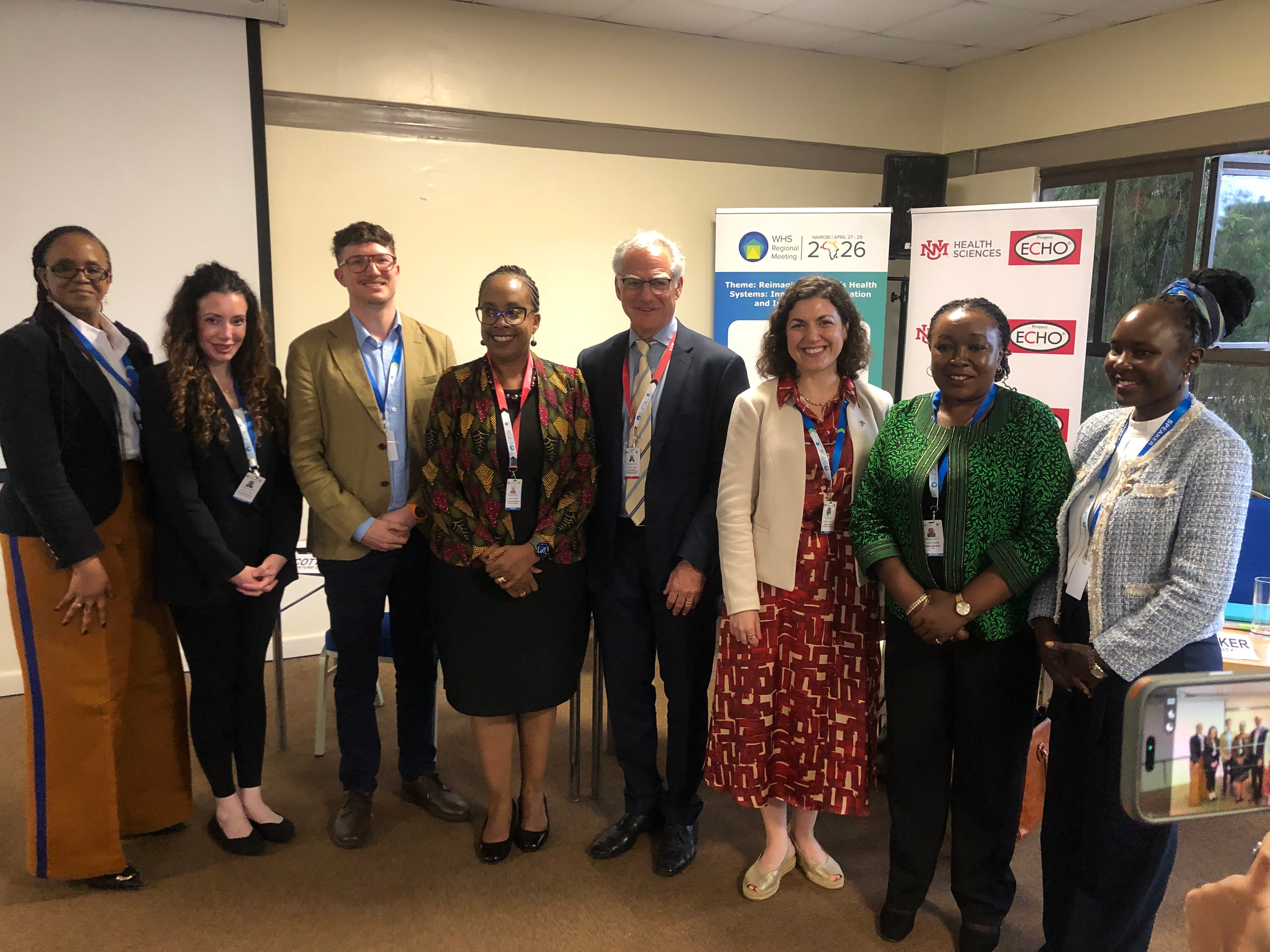
The session, “Trust in Science: Advancing Quality Health Information in the Age of Digital Health,” which was hosted by Nature Commission brought together Mercy Korir (Willow Health), Vivianne Ihekweazu (Nigeria Health Watch), Rebecca Ivic (University of Alabama), Nancy Booker (Aga Khan University), Ozge Tuncalp (Institute of Tropical Medicine, Antwerp), Ben Johnson (Nature Commission), and Jacqueline Kitulu (World Medical Association).
Discussions reiterated how the health information landscape is quickly shifting. Digital platforms and artificial intelligence have expanded access to health information, but they have also made it harder to distinguish evidence from distortion.
Traditional gatekeepers of health information such as journals, ministries, and academic institutions no longer determine how information reaches the public. Today, social media platforms, messaging apps, and algorithm-driven feeds increasingly shape what people see, share, and believe.
Examples were made visible across African contexts.
Vivianne Ihekweazu, the managing director of Nigeria Health Watch described how digital platforms have transformed health communication, but also created a space where people often rely on peer networks and online sources over trained health professionals when making decisions.
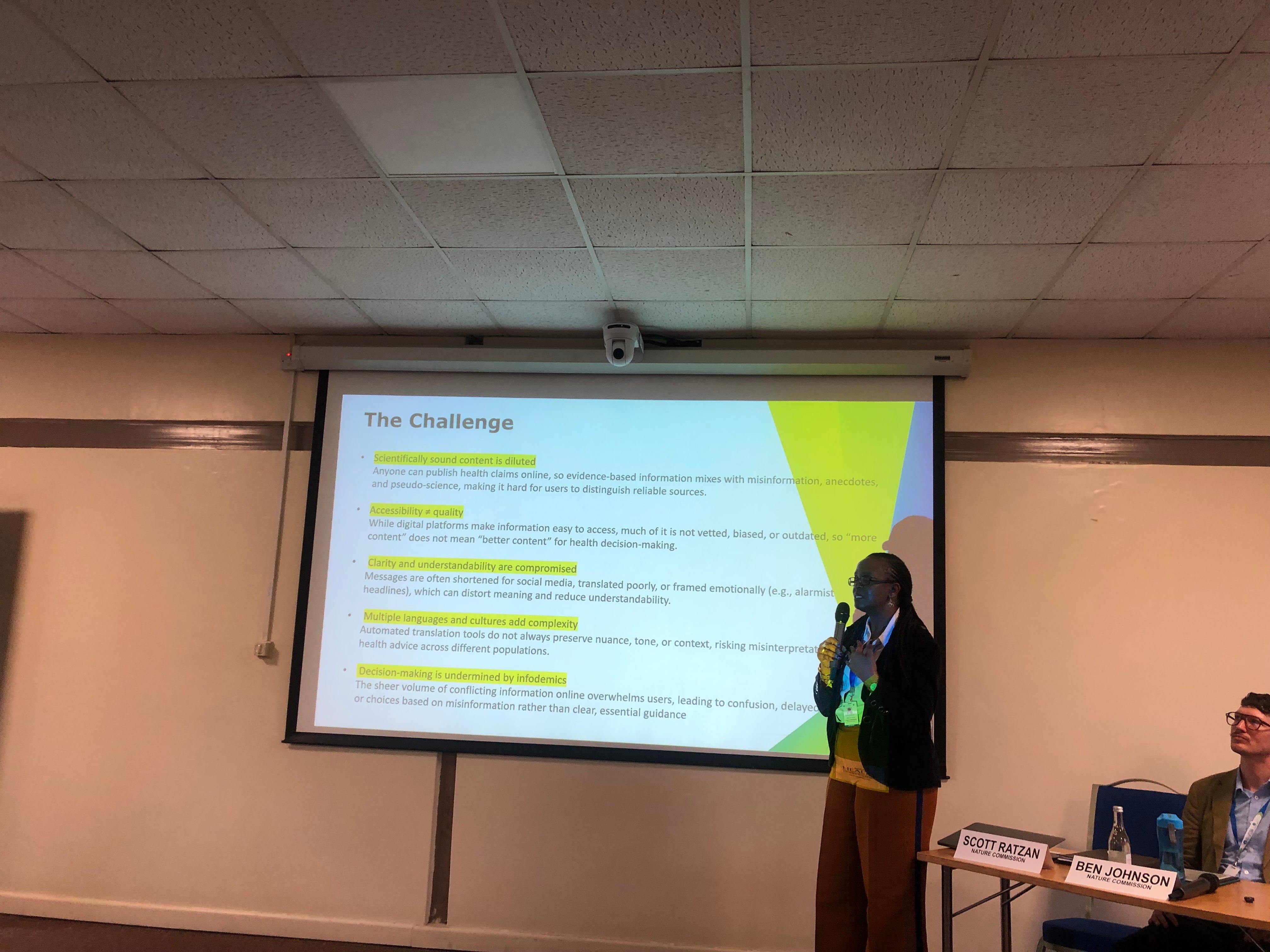
During the COVID-19 pandemic, misinformation influenced health behaviours, including the use of unverified remedies and vaccine hesitancy in some communities. Those patterns have continued to shape how people engage with health systems long after the emergency phase ended.
“False information travels around the world as the truth is tying its shoes,”
said Mercy Korir of Willow Health, capturing the speed at which misinformation now moves compared to verified evidence.
For Jacqueline Kitulu, president of the World Medical Association, the issue is not only technical but ethical. “We are surrounded by health information, but much of it is unverified, misinterpreted, or deliberately misleading,” she said. “Patients have a right to reliable, evidence-based health information.”
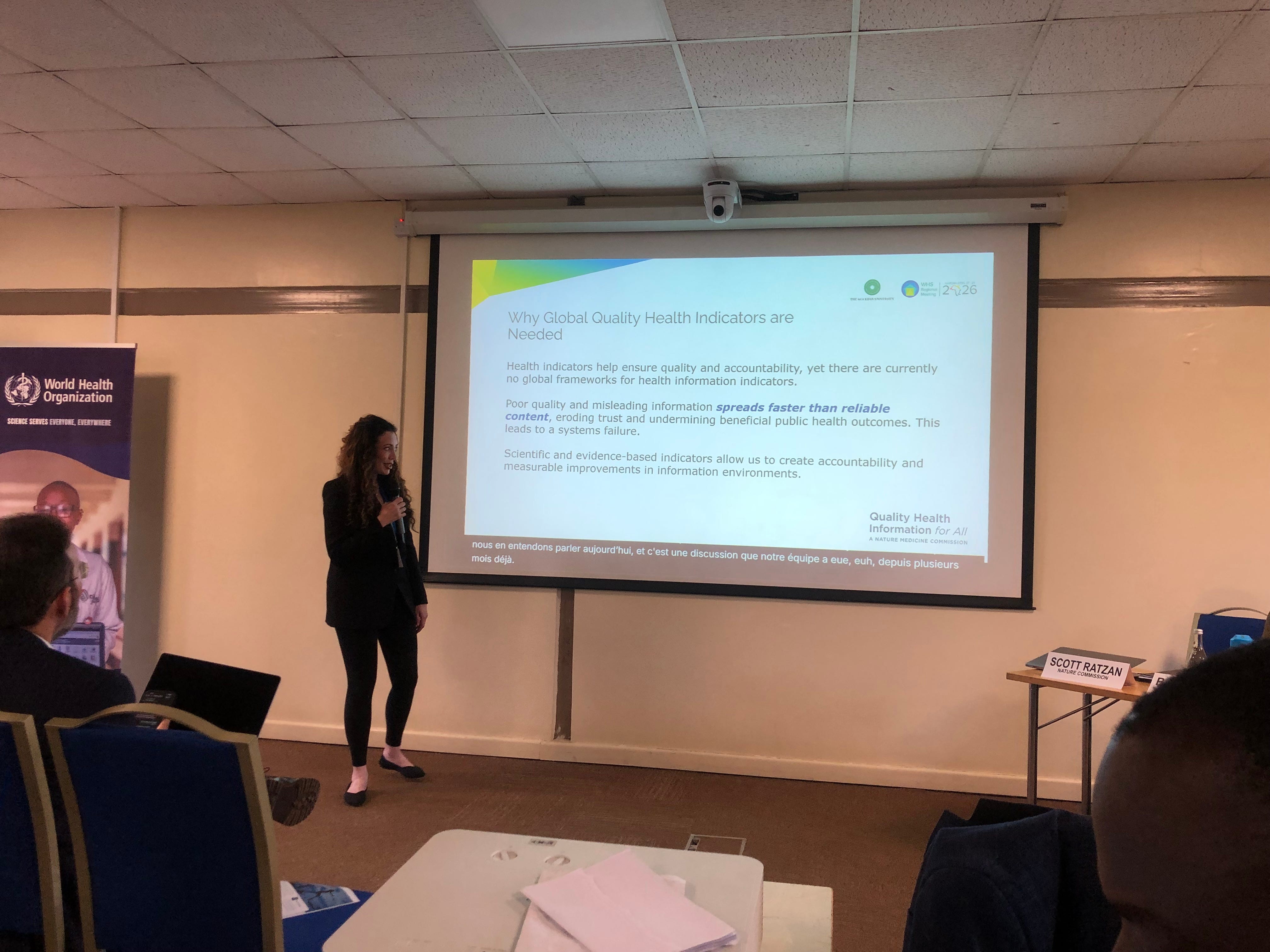
Responses to this shift are beginning to take shape. Rebecca Ivic of the University of Alabama highlighted ongoing work to develop global indicators for assessing the quality of health information, while Booker, Tuncalp, and Johnson stressed the need for stronger governance frameworks and greater accountability in how evidence is produced, communicated, and acted upon.
The session closed with a clear consensus: no single intervention will fix the problem. Building trust requires working across multiple layers simultaneously — accurate information, relatable communication, stronger health literacy, and, importantly, coherence between what people encounter online and what they hear from health workers in clinics and communities.
For Africa, the urgency is clear. Health systems are already overstretched, and misinformation routinely outpaces the public health responses designed to counter it. In this environment, rebuilding trust in health information is not a secondary concern — it is as fundamental to survival as the care itself.