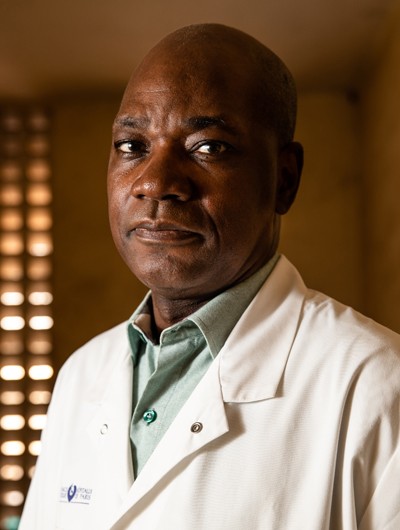

By Professor Rose Leke, Malaria expert and Chair of the Gavi Independent Review Committee and Dr. Seynudé Jean Fortune Dagnon, Senior Program Officer, Malaria, Gates Foundation.
In small towns across Africa, malaria does not arrive as a headline. It comes quietly, in cycles: a fever that keeps a child out of school, a parent too weak to work, a clinic that never quite empties. In some places, malaria has become a constant feature of life, persistent enough to shape everyday life, familiar enough to risk being normalised. For many in our communities, malaria is seen as simply part of life, a perception that must change if we are to eliminate the disease.
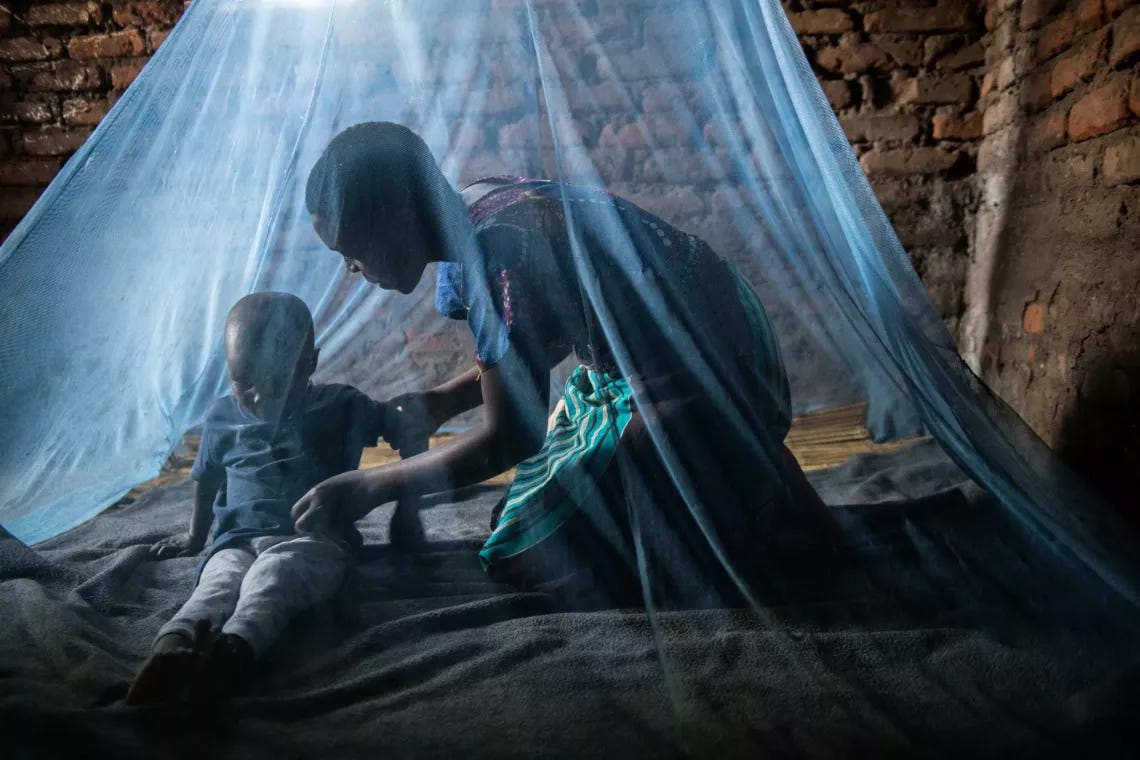
Over the past two decades, countries across Africa have made real progress. Expanded use of bed nets, improved diagnostics, effective treatments, seasonal prevention, and more recently malaria vaccines have saved millions of lives. According to the World Health Organization (WHO), malaria interventions have prevented over two billion cases and millions of deaths globally since 2000, with Africa accounting for the majority of those lives saved.
However, World Malaria Day presents us with an opportunity to ask a longer‑horizon question: what kind of progress will be needed to truly end malaria as a public health threat? Three observations stand out as essential in helping us guide our reflection and action;
(1) Strategies designed for control are not designed for permanence.
(2) Elimination is fundamentally about equity, reaching those who are consistently left out.
(3) Innovation must be understood broadly, as a portfolio of tools and approaches shaped and led by countries themselves to address malaria in a systemic way.
To truly eliminate malaria in Africa, one additional move is needed: beyond technical progress, we must work with our communities to understand and communicate that we are moving past the era of control toward permanently interrupting transmission. It is possible to eliminate malaria. This shift in mindset must be shaped with our communities.
The limits of strategies designed for control
Control has been highly effective at reducing deaths, particularly among children. But it relies on continuous repetition. Bed nets must be replaced, medicines restocked, prevention campaigns repeated year after year. Yet the most recent global data show that malaria cases and deaths remain heavily concentrated in the African region, which still accounts for around 94–95 percent of global malaria deaths, despite widespread coverage of core tools.
These patterns suggest that while control saves lives, it does not always interrupt transmission permanently. Elimination changes the way the problem is framed, shifting attention from managing malaria season after season to breaking the chain of transmission itself, reducing long‑term dependence on repeated interventions.
Malaria elimination is about equity
Malaria increasingly persists in the same places: remote rural areas, border communities, informal settlements, and regions where health systems face chronic constraints. WHO and partner analyses show that a relatively small number of high‑burden countries account for the majority of global malaria cases, even as national tool coverage improves.
Elimination refocuses attention on these remaining gaps. Beyond national averages, success takes into account whether transmission continues anywhere, and why. In that sense, elimination is also about equity, prioritising children and communities who are consistently hardest to reach and sometimes last to benefit. This requires deeper involvement of our communities, not only as recipients of interventions but as active partners and leaders in elimination efforts.
Country-led innovation is a game changer.
Innovation in malaria spans a broad portfolio: the roll‑out of new malaria vaccines now introduced in multiple African countries, next‑generation insecticide‑treated nets, improved diagnostics, enhanced surveillance systems, and approaches that seek to address malaria transmission at its source, alongside more precise delivery strategies.
According to WHO, the combined impact of new tools and improved delivery approaches saved more than a million lives globally in recent years alone, even as emerging challenges such as insecticide and drug resistance threaten existing gains. The core issue here is addressing the challenge in countries across Africa is not the use of any single tool, but how countries assemble the right mix of interventions for their national contexts.
Innovation is also about robust institutions. New approaches must be evaluated rigorously, regulated transparently, and shaped by national priorities. Community engagement is central to this process, and an integral part of how those decisions are made. Trust, governance, and leadership are as essential as technical effectiveness.
Across Africa, scientists, regulators, and public health institutions are already strengthening this capacity, building evidence, reinforcing regulatory oversight, and developing frameworks to govern innovation responsibly at the country level.
Why this matters
Taken together, these observations point in the same direction. Bed nets, treatment, preventive therapies, and vaccines remain indispensable. They are the reason millions of children are alive today. But relying on these tools alone keeps the global response oriented around containment. Complementing them with sustained investments aimed at elimination, stronger health systems, responsible innovation, regional coordination, and community leadership, opens the possibility of a different outcome. Centering community leadership and ownership alongside these investments strengthens the possibility of a different, lasting outcome.
Elimination is demanding. It requires long‑term commitment, cooperation across borders, and the patience to invest even when results are not immediate. But malaria has endured for centuries in part because it adapts to the spaces we leave unattended. Ending it will require sustained attention of a different kind, deliberate, collaborative, and forward‑looking.
World Malaria Day is a moment to reflect on whether we are ready to make that turn.
Subscribe to Africa Health Watch
Get the latest health policy analysis and investigative journalism delivered straight to your inbox.
We respect your privacy. Unsubscribe at any time.