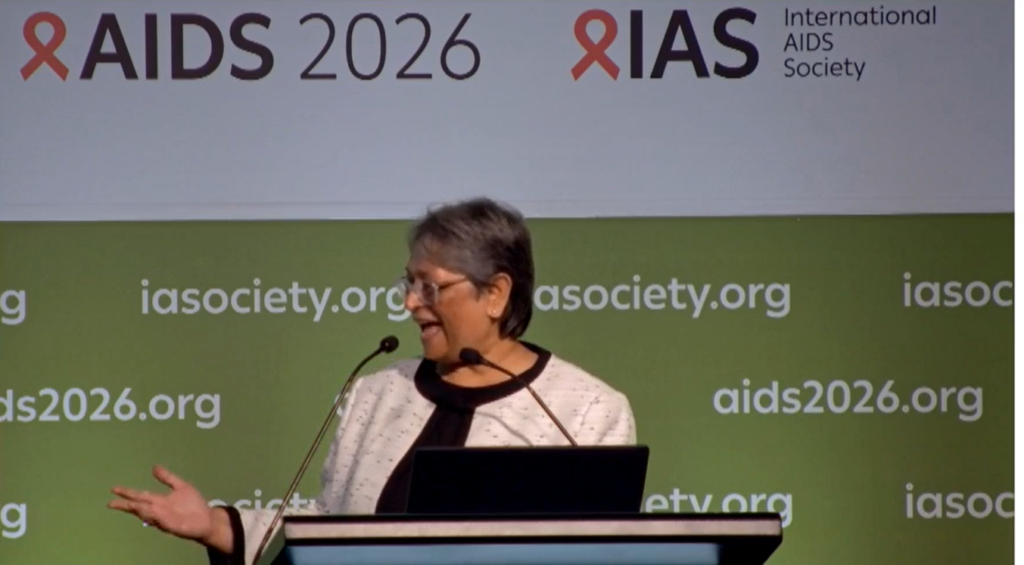

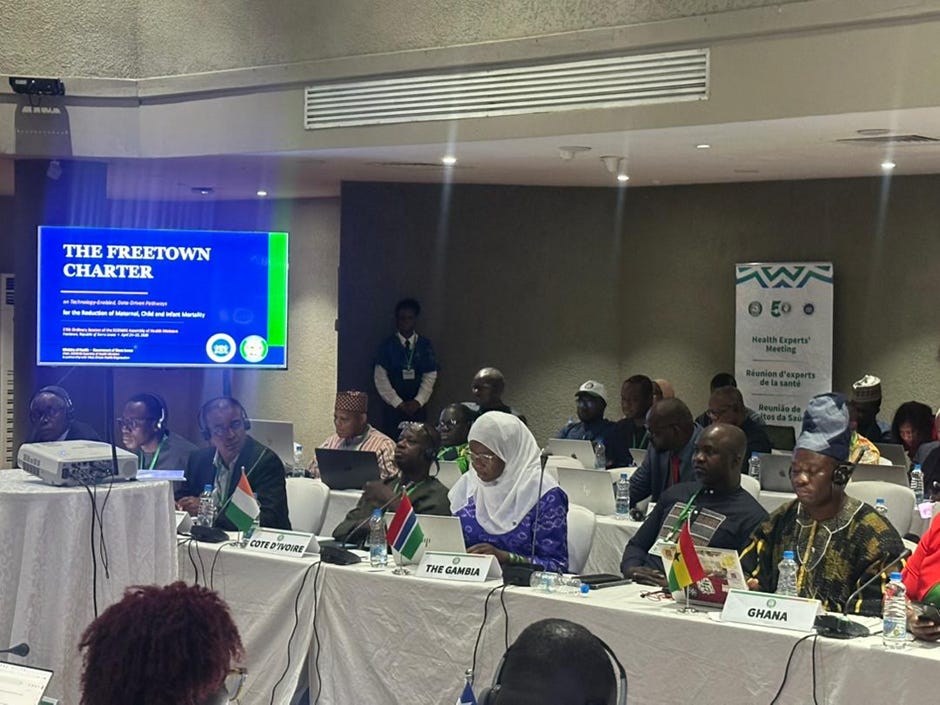
At the Health Experts Meeting of the 27th Ordinary Session of the ECOWAS Assembly of Health Ministers, Dr. Satti Kenneth, Chief Medical Officer of Sierra Leone, presented the Freetown Charter — a proposed regional, time-bound, principle-based commitment to leverage digital technology and data-driven systems to reduce maternal and child mortality across West Africa.
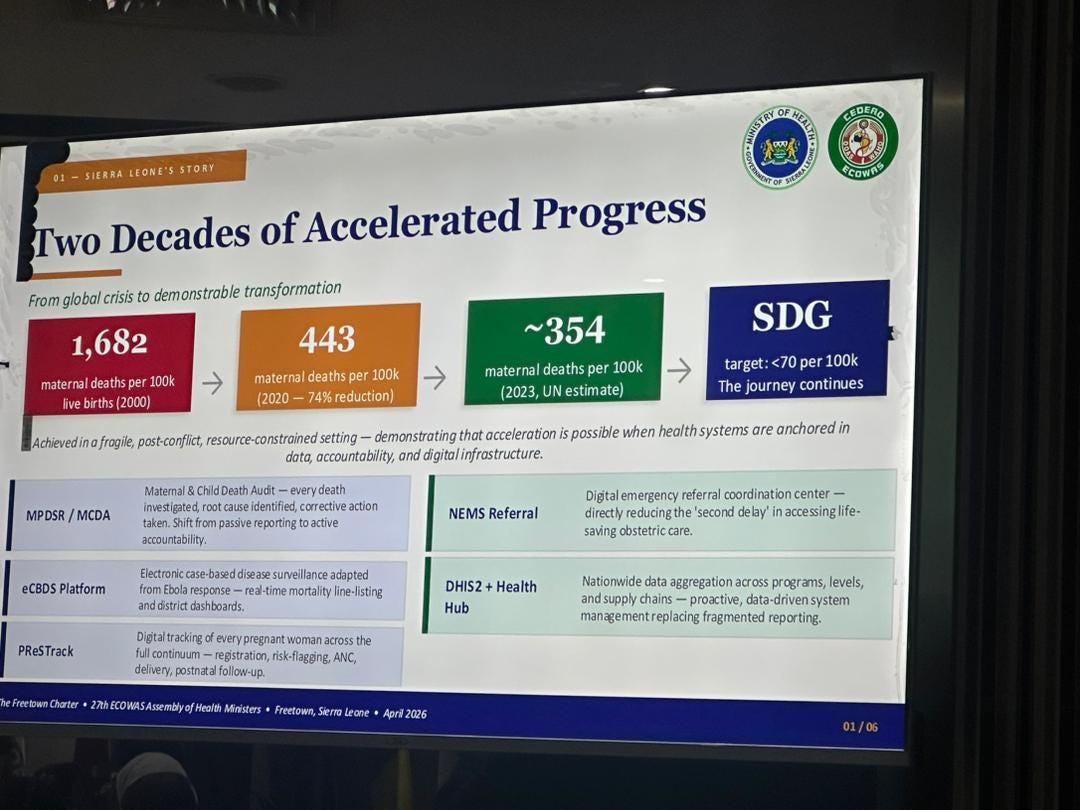
In 2000, Sierra Leone recorded 1,682 maternal deaths per 100,000 live births — the highest maternal mortality ratio in the world. By 2023, that figure had fallen to 354. Dr. Kenneth came to Abuja, Nigeria, not to celebrate that number, but to propose that West Africa builds the system behind it together.
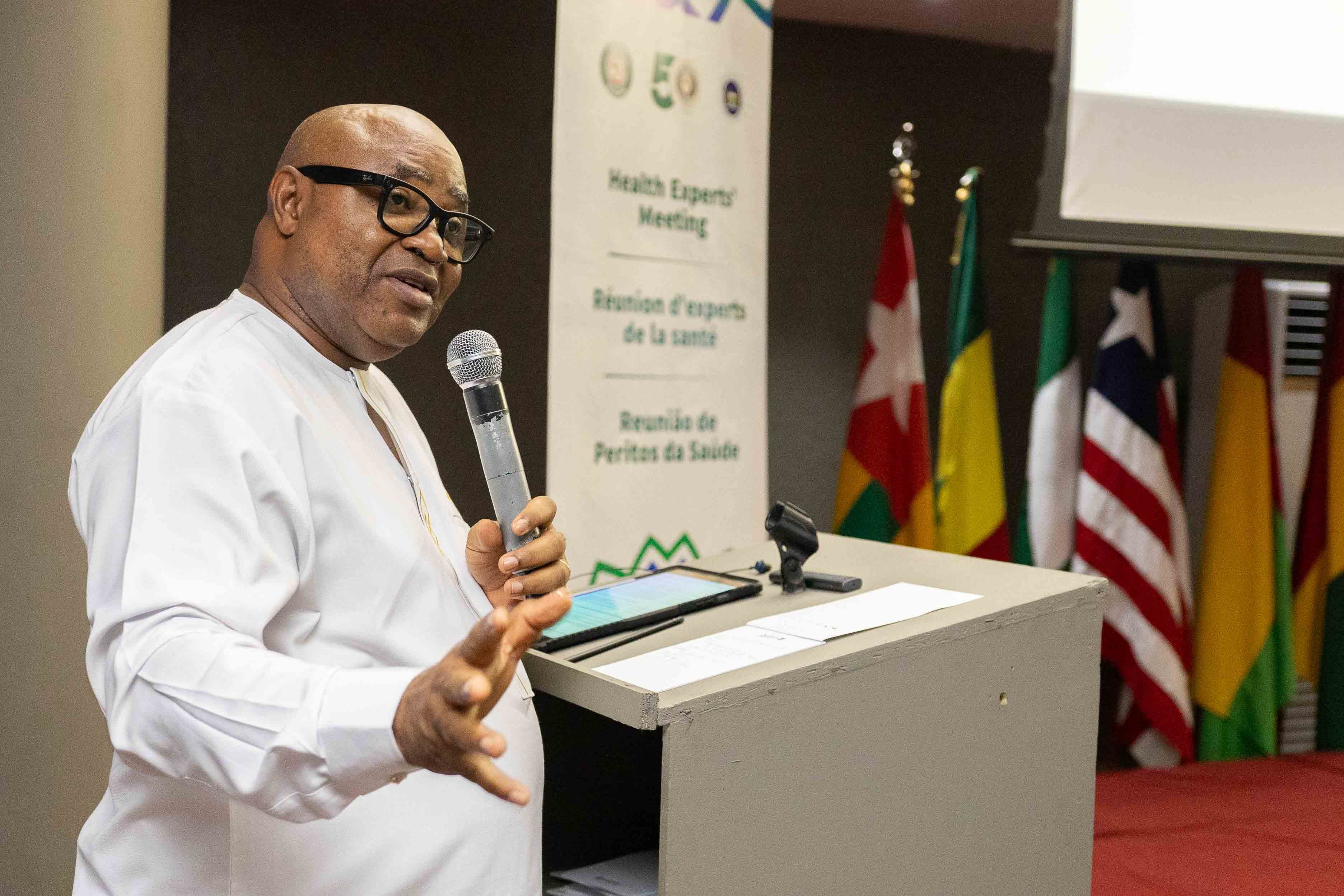
Presenting the Freetown Charter, Dr. Kenneth was deliberate about what drives change. “The buzzword is not the technology. It is not the digitalisation that is going to save lives. Make no mistake, it is actually the decisions that we make and the actions that we take that change things. But digital and innovative technology can position us in such a way that we act fast in response, remain accountable and accurate, and make progress in a very short time.”
Sierra Leone’s journey illustrates exactly that. During the Ebola crisis, the country developed an electronic case-based disease surveillance system, shifting from aggregate to real-time reporting. That system was later adapted for maternal and child health. Every death is now reported immediately. Every week, a national review call connects leadership, specialists, district officers, UN partners, and regulatory bodies. A midwife’s absence, an unsigned supply document, a delayed referral —failures that once went undetected now surface within hours.
The data has also driven direct clinical decisions. When supply chain data flagged heat instability in oxytocin stocks, Sierra Leone switched to heat-stable carbetocin, reducing deaths from postpartum bleeding. When data revealed high anaemia rates, the country shifted from iron and folate to multiple micronutrient supplements. “Data must lead to action,” Dr. Kenneth told delegates.
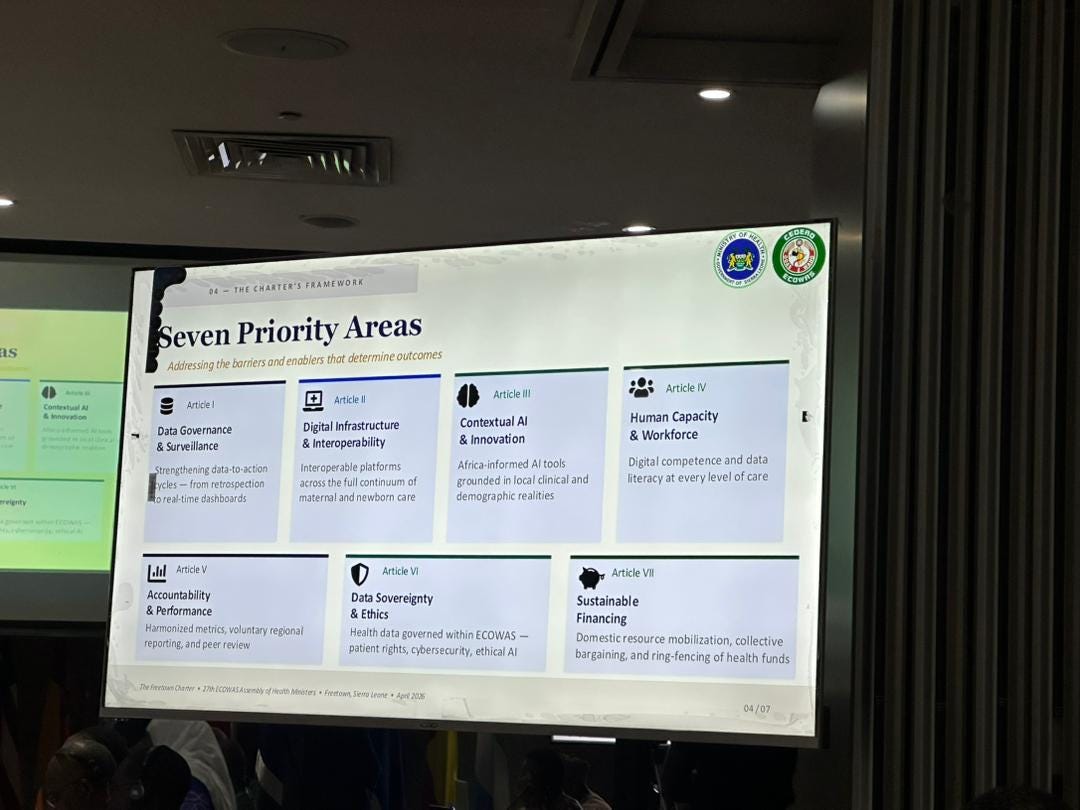
The Freetown Charter proposes seven priority areas: Data governance and surveillance, Digital infrastructure and interoperability, Contextual and Innovation, Human capacity & workforce, Accountability & Performance, Data Sovereignty & Ethics, and Sustainable Financing. Its targets include institutionalising maternal and child death audits, adopting digital tracking tools across health facilities, and developing AI-based tools by 2030.
“This will not be the end, but the beginning of a collective effort to strengthen health systems across the region”
~ Dr. Satti Kenneth, Chief Medical Officer, Sierra Leone
Sierra Leone’s experience offers an early indication that the Charter’s ambitions are not merely aspirational, but actionable.
Subscribe to Africa Health Watch
Get the latest health policy analysis and investigative journalism delivered straight to your inbox.
We respect your privacy. Unsubscribe at any time.