
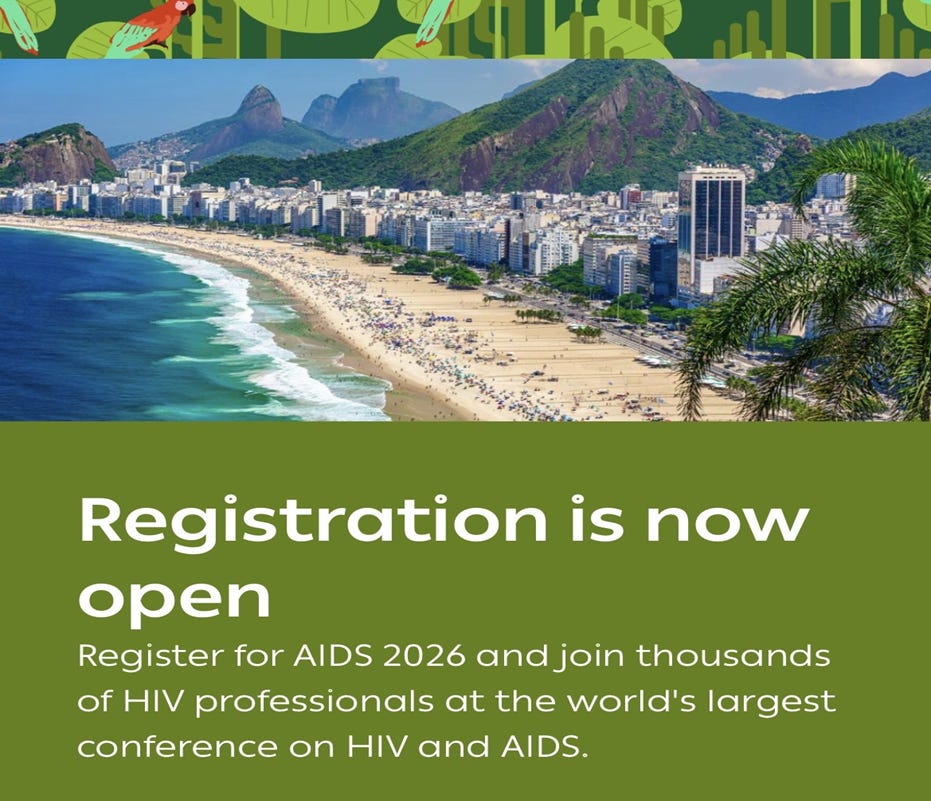
From 26-31 July 2026, International AIDS Society (IAS) will be hosting the 26th International AIDS Conference (AIDS 2026) which will take place in Rio De Janeiro, Brazil with the theme: Rethink. Rebuild. Rise.
Through high-level plenary sessions, symposia, oral presentations, and satellite meetings, the convening will bring together people living with HIV, researchers, policymakers, healthcare professionals, funders, media representatives, and communities from across the globe, both in person and virtually. The gathering will serve as a platform to rethink outdated models, rebuild systems to put people first, and rise together through inclusive policies, innovation and sustained collaboration.
With AIDS 2026 taking place just four years before the 2030 deadline for global HIV targets, the conference comes at a critical moment for global HIV response.
Why This Matters
Hosting AIDS 2026 conference comes at a pivotal moment for the global HIV responses as shifting geopolitical dynamics and funding uncertainties threaten decades of progress. With the 2030 deadline now just four years away, the conference is a vital moment to assess how far the global response has come, confront the inequalities and other barriers still standing in the way, and strengthen the evidence-based policies and programmes needed to reach the goal in time.
For Africa, home to an estimated 65% of all people living with HIV, the stakes could not be higher. As external funding contracts and global attention drifts, the continent stands to lose the most from any retreat in the HIV response — making AIDS 2026 a decisive moment to defend hard-won gains, close the persistent gaps in prevention, treatment, and care, and push for financing models that put African countries in the lead. How loudly Africa speaks here will help determine whose priorities shape the path to 2030.
Africa Health Watch Dispatch: Live from Rio De Janeiro
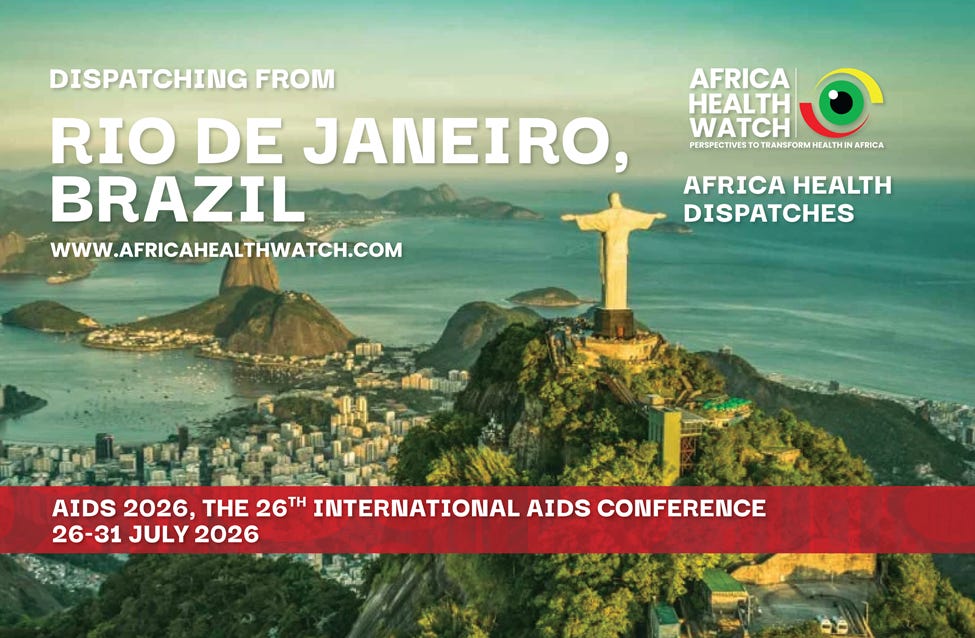
Africa Health Watch will be providing timely reporting and analysis through our Africa Health Dispatch series. Readers can expect:
· Live updates from major plenary sessions and high-level engagements
· Concise summaries of priority discussions and key takeaways
· Voices and perspectives from policymakers, public health experts, and emerging leaders
· Contextual analysis connecting conversations to African realities